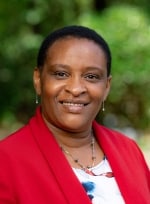
Associate Dean of Access, Belonging, and Global Engagement & Clinical Associate Professor Mary Gitau is accepting the Partners in Advancing International Education (PIE Award) on behalf of the UTCSW study abroad students at the 2026 Council on Social Work Education (CSWE) Awards Luncheon. The PIE Awards are given in recognition of conceptual, curricular, and programmatic innovations in education for global social work.
The winners are a group of 11 social work students from the UT College of Social Work who participated in a two-week study abroad program in Kenya. The students had enrolled in a course entitled Social Justice and Social Change from a Global Perspective, which provided students with opportunities to engage with social service agencies, university partners, and local communities through a service project while learning about global social work practice.

The students who were in both the undergraduate and foundation-year master’s level took the course as an elective that was meant to prepare them for professional social work practice within the context of global interdependence, international social work practice, and practice with multicultural populations in the United States. Through the lens of the United Nations Sustainable Development Goals (SDGs), students were provided with opportunities to learn about and understand some of the most pressing environmental, economic, and social challenges in the world today. Through required readings, cultural excursions, visits to local agencies and educational institutions, and engagement in a service-learning activity, students developed an understanding of major social and social justice issues affecting individuals, families, groups, communities, and organizations in Kenya. They also reflected on the varied approaches used to address serious social problems and social needs. The learning experience was grounded in the Ubuntu philosophy, which translates to “humanity” or African humanism and aligns with principles of human rights and social justice. This framework encouraged students to adopt open-minded, critical, and collaborative approaches to understanding our complex, geopolitical, social, economic, and environmentally diverse yet interdependent world.

During the 14-day trip to Kenya, students spent four days participating in cultural immersion and a community service project. In collaboration with local community members, students completed a service project at the Bariki Community Center, which is located in Central Province of Kenya, where they worked to install pavers around the compound to make the center safer and more accessible for community use. Students worked alongside community members and local experts for a full day, hauling pavers from the storage area and assisting with their installation throughout the center. This experience allowed students to contribute meaningfully to the community while also creating opportunities for cultural interaction and cross-cultural exchange of knowledge and skills. The U.S. students learned directly from local experts who, while they may not have formal academic education, possess specialized technical expertise in installing pavers. This experience encouraged students to practice cultural humility and recognize the value of local knowledge and skills.

Another important component of the program involved cultural immersion with members of the local community who use the Bariki Community Center to learn vocational skills. During one afternoon, the Bariki women’s group demonstrated bead making and basket weaving, sharing the skills they have developed through the center. Students had the opportunity to interact with the women, learn about their work, and purchase some of the handmade baskets. The students also shared meals with community members, and at one point, the women demonstrated traditional methods of washing utensils by hand, further enhancing the students’ cultural immersion and understanding of daily life in the community.

The students also spent a full day visiting two local schools, Faru Elementary School and St. Michael Faru Secondary School. During these visits, they engaged with Kenyan students through various classroom and outdoor activities. Kenyan students introduced the visiting group to local games and invited them to play together on the playground, while the U.S. students shared games from their own experiences. These interactions created meaningful opportunities for dialogue and mutual learning. Many Kenyan students were curious about what it is like to live and study in the United States, leading to rich conversations and exchanges. Additionally, some of the visiting students spent time speaking with local teachers about education systems and practices in the United States, responding to questions and discussing differences and similarities between the two contexts.
As preparations for another study abroad program in Kenya in Summer 2027 begin to take shape, the work accomplished by this group of students is providing a strong and lasting foundation for those who will follow. Their efforts have helped shape a meaningful platform for continued service, cultural exchange, and collaborative learning. This foundation creates valuable opportunities for future students to broaden their global perspectives, strengthen their understanding of social justice and community engagement, and learn from cross-cultural relationships in ways that enrich both their academic and professional development.