
UTCSW Clinical Professor Dr. Ragan Schriver had a busy summer, but rather than spending all his time lounging by the pool, he traveled to various locations addressing mental health issues.
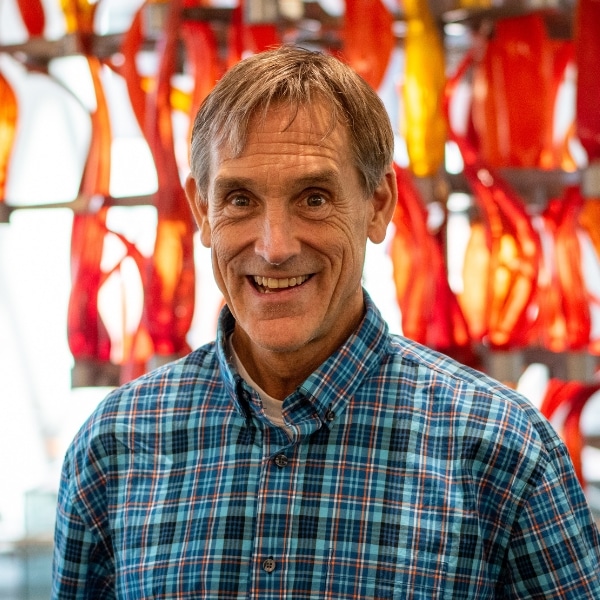
Schriver presented at a conference hosted by the Tennessee Association of Community Action (TACA), a statewide organization that supports the local county community action agencies. Schriver serves as vice president of the board of directors of the Knox County Community Action Committee (CAC).
Speaking on the topic of “The Social Determinants of Mental Health,” Schriver explained that there is a great deal of conversation about the social determinants of health such as how poverty and stress impact the physical health of individuals, noting that social work is heavily engaged in these issues. “There is not quite as much attention paid to the social determinants of the mental, emotional, and cognitive side of things, when really they are all intertwined in the overall health of the person,” he said. “One example of this is that research has shown that population density is correlated with an increase in behavioral health conditions as severe as schizophrenia spectrum disorders. Being aware of this can help us in planning social work interventions on a macro level by considering how we could mitigate negative or stressful impacts of overcrowding in cities. On the flip side, isolation is another huge factor in contributing to such conditions as depressive disorders, so this is another area where social workers can support in clinical settings as well as macro settings to create opportunities to reduce the impact of loneliness and isolation.”
The establishment of CAC agencies in local municipalities goes back to the war on poverty legislation, where these agencies were set up to reduce the impact of poverty on communities. “Our local CAC does many important works in the area, including transportation, homeless street outreach, and all services under the Office on Aging,” Schriver said. “They do really great work, and I was very honored to be part of presenting at their conference.”
In addition to being a local presenter, Schriver traveled to Cedar Rapids, Iowa, to present two workshops there. “I went to Cedar Rapids for two presentations that were both one day long,” he explained. “Both workshops were on the topic of the impact of ‘Trauma and Trauma-Informed Care’ (TIC). The first day was spent with a multi-program social agency in their area, it is a Catholic Charities organization that provides behavioral health services, feeding programs, housing, elder services and case management. I addressed the workshop toward some clinical subjects like understanding the impact of trauma, what it is, assessment, discussion of therapeutic interventions, family interventions, and logistics on engaging with people who have experienced trauma. For the entire group, which included administration, finance, janitorial staff, as well as program staff, we talked about how we can take universal precautions to mitigate the possibilities of re-traumatization by supporting folks who have experienced trauma in different ways. We spent time looking at some cases and scenarios as well as some actual events that have happened at their agency to reflect on how the organization can be even better in the future.”
The second agency Schriver spoke with serves immigrants and refugees. They provide case management, as well as extensive legal services to people who need help with managing their legal status. The attendees, made up of lawyers, social workers, counselors, case managers and others who support the cause, discussed how the entire process of migration (whether an immigrant or a refugee) can be potentially traumatic for those making the journey. “Many people who leave familiar surroundings may experience trauma from the difficulties that caused them to leave their environment, such as the actual traveling to the new destination, which can be fraught with very painful and difficult aspects as well as the arrival to a new home were they may be unfamiliar with cultural norms and there may be huge language barriers as well as terrible discrimination,” he described. “There is a possibility for the body/brain to react to these adversities as significant trauma. Much of the conversation that day included sharing material about secondary trauma and how the work has impacted the staff. They spoke about experiencing prejudice and discrimination just because of the work that they are doing to help others. I was really struck by how brave these folks are to keep doing the work they do.”
Schriver added, “I also spoke to a team at the McNabb Center who work with the Knox County schools providing therapeutic services to the students,” he said. “During the summer since some of the interaction with students is less, they take an opportunity to get some training, so I spoke to them about the Diagnostic and Statistical Manual of Mental Disorders, 5th edition, Text Revision. I also spoke to them about trauma-responsive care. There are a number of our alumni doing great work through that program as well.”
Overall, Schriver said his summer was very productive and he enjoyed meeting new people and speaking to them on a subject near and dear to his heart. “I very much enjoyed the summer but am now looking forward to focusing on the Fall semester and teaching a new group of social work students all there is to know about making a difference in the world.”
