
Field education is an essential and required component of the BSSW and MSSW programs at the UT College of Social Work (UTCSW). Unlike traditional internships, field placements immerse students in hands-on social work practice, allowing them to apply classroom knowledge under the supervision of experienced professionals. In these settings, students integrate theory, research, and practice in a variety of environments.
Kim Crane Mallory, Director of Field Education, explains that the UTCSW believes students deserve a supported, intentional bridge between the classroom and the profession. “Our primary objective is to ensure that every student has a meaningful and well-supported field experience that connects their classroom learning to social work practice,” she explained. “We do this by focusing on several key areas such as connecting students with meaningful learning opportunities, building and sustaining strong community partnerships, preparing students for the social work profession, and supporting students throughout the field experience. Ultimately, our goal is to create field experiences that are transformative for students and valuable to the communities in which they learn.”
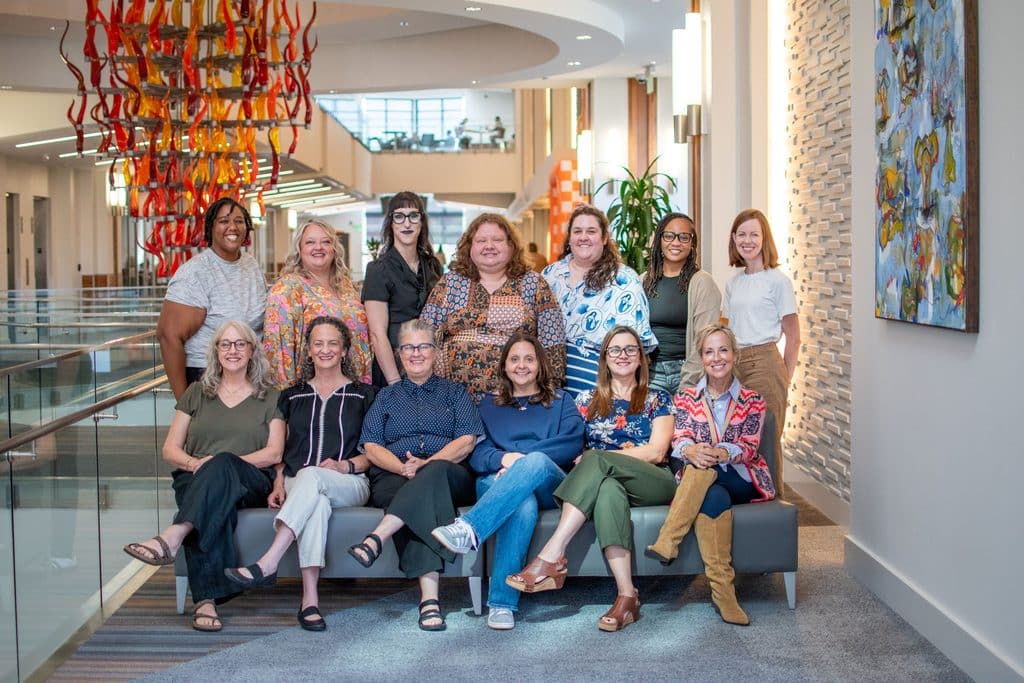
The structure of the field team has evolved over the years to meet the needs of the growing student population. Field coordinators are primarily assigned students by program and geography, but their work extends far beyond placement. They recruit and support field agencies, train and support field instructors, supervise field liaisons, place students, teach field seminars, and provide ongoing mentoring and support to students throughout the field experience. Field staff also work closely with students and agencies to navigate agency requirements so that students are prepared to begin field on time, while supporting events, training initiatives, and the field database. “One thing that is particularly unique about our team is that we are always working across two academic years at once,” Mallory said. “While we are supporting students who are currently in field, we are simultaneously building relationships with agencies and planning placements for the next cohort. That requires our team to think both about the student experience today and about building the capacity we will need for tomorrow.”
As the Assistant Director of BSSW Field Education, Kim Denton serves as a point of connection. “My role includes supporting and monitoring student progress, connecting field experiences to BSSW competencies and learning plans, addressing concerns and facilitating solutions, developing and maintaining field syllabi and Canvas sites, training and supporting field instructors and field faculty liaisons, developing and strengthening community partnerships and placement opportunities, and ensuring the BSSW field program aligns with accreditation standards and program requirements,” she explained. ” I identify and develop new field placement opportunities by considering the needs, interests, and learning goals of our BSSW students while also seeking agencies that can provide meaningful social work experiences aligned with our competencies and accreditation requirements. This includes researching community organizations, networking with local professionals and university/community partners, reaching out to potential agencies, and discussing their capacity to supervise students and to provide appropriate learning experiences. I truly love that my job gives me the opportunity to work with both students and social work professionals throughout our community. One of the most rewarding aspects of my role is supporting students as they transition from being social work students to becoming confident, capable professionals.”
Assistant Director of Field Education Tami Walker agrees that the strong and personal connection with both the students and the agencies is what sets the program apart from a typical internship. In her role, Walker works primarily with online students and supports students from all different backgrounds from all over the country. “Helping students to problem-solve, learn how to have hard conversations, and confront themselves is never boring,” she said. “It is also fulfilling to hear about student accomplishments and their joy when they do something they previously thought they could not do. Another part of my role with the field education team is helping develop international placements. There is a particular type of growth that happens with students when they do their placements internationally, that cannot be replicated stateside. It is a joy to watch them use these experiences, even the challenging ones, to contribute to the development of their social work identity.”
For Nashville MSSW Field Coordinator Allison Diehl, a typical day in the office varies greatly from day to day, which she admits is one of the things that makes her job most interesting. “A day for me as a field coordinator would likely involve several student meetings in my office to share updates, ask questions, and address needs related to their field placements,” she stated. “It may also include meeting with a potential new community partner to tour their agency or learn more about their work and if they would be a great field placement for our students. Some days involve leading a field seminar, in which students process their learning and draw connections between other coursework and field placement experiences. Finally, it might include collaboration with other faculty, advisors, and agency field instructors as we support students in their learning goals. It’s always changing, always exciting, and always fulfilling.”
Mallory notes that the goals of the field team are always at the top of everyone’s minds when it comes to their work. One of their most important goals is to continue expanding paid field placement opportunities. “We have increased paid placements by more than 130% from 2023 to 2026,” she said. “Today, more than 40% of MSSW students and 15% of BSSW students have a paid placement. This work is particularly important because unpaid field education can create significant financial barriers for students. We are committed to working with community partners to identify creative ways to reduce those barriers while maintaining high-quality learning experiences. Additionally, we have placed and supported around 700 students, trained and supported 500 field instructors, and recruited over 200 new agencies. We have over 80 out-of-state students, representing over 30 states plus Washington, D.C. We have global placements in Kenya and the Dominican Republic, a new collaboration with UTK Speech/Audiology, and a partnership with Vanderbilt Interprofessional Health Education Collaborative (VIPHEC). These milestones are the result of every person on our team working tirelessly every day. Our field education program is a signature strength of the College of Social Work. Field is where students move from learning about social work to actually practicing it. Students begin to see themselves as social workers; they develop relationships with the communities they will serve, and they discover what they are capable of doing. Being able to support that transformation is what makes this work so meaningful for our team. Our students consistently identify their field experience as the most impactful part of their social work education, and that is something that makes our team proud.”
Professor and Acting Associate Dean for Faculty Affairs Dr. Mary Held recognizes the significance of this subset of the college. “As I continue to discover the work of the field education team, I am constantly amazed at their commitment and the depth of their relationships with the students,” she said. “This group and the work they do provide the students with real-world experience which allows them to be fully equipped to go out and make their mark on the world.”
The UTCSW Field Education Team
Kim Crane Mallory
Director of Field Education
Kim Denton
Assistant Director of BSSW Field Education
Tami Walker
Assistant Director of Field Education
Brittany Adams
Online BSSW Field Coordinator
Adrianna Carter
Online MSSW Field Coordinator
Jane Crowe
MSSW Field Coordinator
Allison Diehl
Nashville MSSW Field Coordinator
Alicia Hirt
Online MSSW Field Coordinator
Rachel Ross
MSSW Field Coordinator
Latausha Stevenson
MSSW Online Field Coordinator
Martina Ward
MSSW Field Coordinator
Cassie Lawson
Administrative Specialist
Angel Giammarella
Nashville Administrative Specialist
