
Forensic Social Work Graduate Certificate
Make a difference at the intersection of social work and the justice system. The Forensic Social Work Graduate Certificate prepares you to support individuals and communities affected by legal and correctional systems. Gain the knowledge, skills, and practical experience you need to advocate for change and deliver evidence-based interventions in diverse settings.
Program overview
The Forensic Social Work Graduate Certificate is a partnership between the College of Social Work and the College of Law. Designed for currently admitted MSSW students, this certificate offers a deep dive into how social workers engage with criminal justice, corrections, child welfare, public defender offices, and policy development. Through specialized coursework in both social work and law, you’ll develop tools for effective collaboration with justice-involved populations and systems.
Requirements
The Forensic Social Work Certificate requires 12 credit hours of graduate/law coursework and at least six (6) credit hours in a field placement that focuses on working with and/or on behalf of populations impacted by the legal system.
Field Component
At least six (6) credit hours in a generalist or concentration MSSW field placement where student learning plans will include assignments related to Forensic SW. The field learning plan will include learning goals specific to the arena of forensic social work.
Application Information
Students will receive information about the certificate program at the time of their admission to the MSSW program.
To be admitted to this program, students must:
- Meet the Graduate Admission requirements for a certificate program.
- Submit a departmental application at the time of their admission to the MSSW program and agree to program requirements. The application includes a brief personal statement describing 1) their reasons for participating in the certificate program, 2) their professional career goals, and 3) acknowledgement that they understand there are additional credit hours to be taken beyond the credits required for the MSSW.
- Students selected for admission must be formally admitted to the certificate through the Office of Graduate Admissions
Program Chair
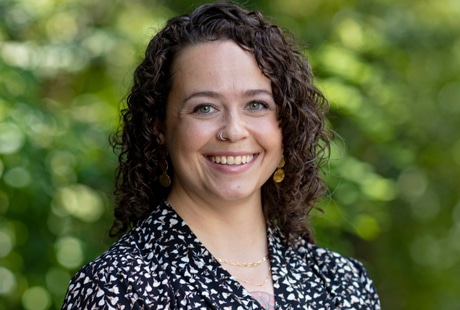
Ashley Pennell
Forensic Social Work Certificate Program Chair, Clinical Assistant Professor
[email protected]
Why get a Forensic Social Work Graduate Certificate?
The United States has one of the highest incarceration rates globally, with millions under correctional supervision. No matter your specialization, social workers regularly engage with clients affected by legal systems. Studying forensic social work at UT equips you to collaborate with criminal justice professionals, advocate for policy change, and deliver trauma-informed support. Through unique interdisciplinary training with the College of Law, you’ll gain hands-on experience that sets you apart as an agent of positive change.
What You Can Do With a Trauma Treatment Graduate Certificate?
Graduates are prepared for meaningful careers across the justice system:
Correctional Social Worker
Support incarcerated individuals with counseling, reentry planning, and advocacy for rehabilitation.
Juvenile Justice Specialist
Support incarcerated individuals with counseling, reentry planning, and advocacy for rehabilitation.
Juvenile Justice Specialist
Collaborate on cases involving child protection within court or legal contexts; ensure children’s rights are upheld.
Policy Analyst (Criminal Justice Reform)
Analyze policies impacting justice-involved populations; contribute to systemic reform through research and advocacy.
Public Defender Office Social Worker
Assist legal teams by providing psychosocial assessments, resource connections, and client support.
Legal Aid Program Coordinator
Coordinate services connecting vulnerable populations to legal representation and supportive resources.
Featured Courses
LAW 503 – Structure and Operation of the American Legal System
Provides non-law students with an overview of the American legal system, including common vs. civil law, U.S. constitutional structure, court organization, and essential legal concepts covered in first-year JD courses.
SOWK 573 – Forensic Social Work in the Criminal Legal System
Provides instruction on forensic social work practice in the adult and juvenile legal systems. These legal systems integrate social work roles in crime prevention, victim advocacy, law enforcement, court systems, carceral systems, re-entry, community supervision, and legislative oversight.
SOWK 574 – Forensic Social Work in the Civil Legal System
Covers forensic social work practice in the civil legal system, including advocacy, abuse prevention, civil rights, family law, disability, elder and immigration law, and legislative oversight. Emphasizes social justice issues—such as disenfranchisement and wage theft—and integrates critical theories, restorative practices, evidence-based strategies, and anti-oppressive ethics across all levels of social work.
LAW 504 – Introduction to Legal Reasoning and Communication
Provides non-law students with an overview of the American legal system, comparing common and civil law, explaining constitutional structure at federal and state levels, introducing court organization, and covering foundational concepts from first-year law courses.

Admissions & Aid
UT and the College of Social Work both offer a variety of financial aid options, including scholarships, grants, work-study programs, and loans for qualifying applicants.