
Dr. Rubén Parra-Cardona, the University of Tennessee College of Social Work Roger and Carol Nooe Endowed Chair, was honored with the 2026 Advances in Culture and Diversity in Prevention Science award by the Society for Prevention Research (SPR), a prestigious global prevention science organization.
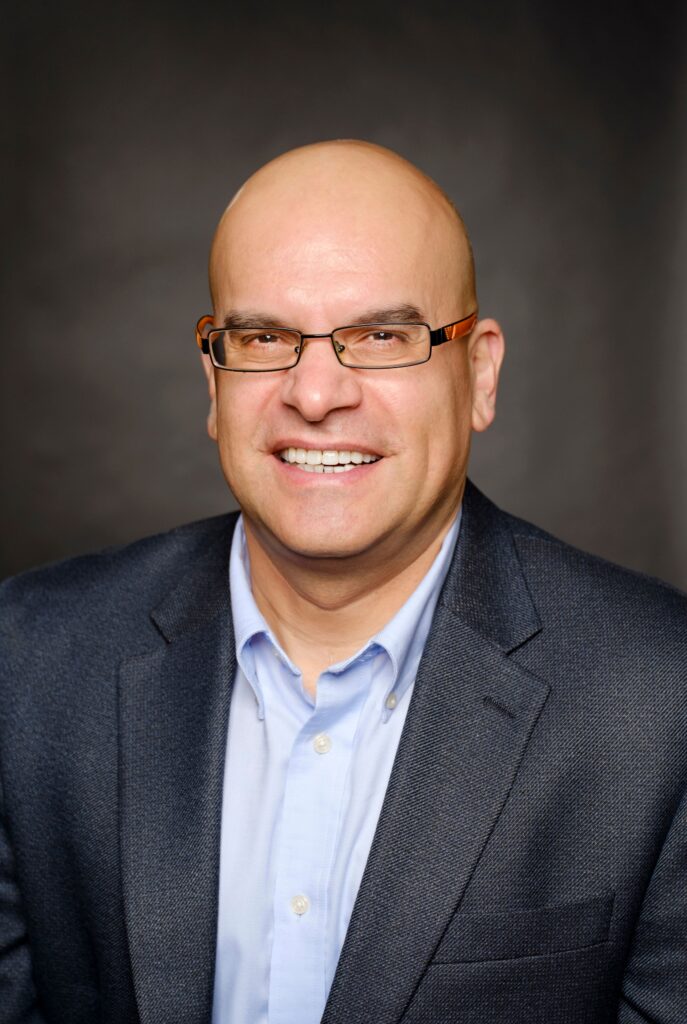
Recipients of this award are recognized for work to enhance understanding of culture in prevention science and the development of and adaptation of effective prevention strategies for traditionally underserved and/or underrepresented populations, including racial and ethnic minorities.
“SPR has been a very important academic home for me as through this organization, I developed many of the long-term collaborations that have highly influenced my program of research since I started my first faculty position,” Dr. Parra-Cardona said. “I have always been inspired by the highly rigorous research led by SPR members, as well as the strong efforts of the organization to promote scholars and science aimed at benefiting underserved and diverse communities. As we have faced an unprecedented context regarding how difficult it has become to promote lines of research focused on diversity, I feel extremely humbled and honored that I was the recipient of this award.”
Dr. Doug Coatsworth, associate dean for research, praised Dr. Parra-Cardona on receiving this award, saying, “The Society for Prevention Research is one of the leading global organizations dedicated to advancing prevention science, and its awards recognize exceptional contributions to the field. This award is a fitting recognition of Dr. Parra-Cardona’s sustained and influential scholarship on culturally grounded prevention.”
Dr. Parra-Cardona’s program of research has significantly advanced understanding of how culturally grounded prevention strategies can be developed, rigorously evaluated, and implemented with underserved populations, particularly Latine immigrant families. “Since I first joined SPR, I was deeply inspired by the highly impactful research conducted by past recipients of the award,” he explained. “In fact, past awardees were among the leaders on cultural adaptation research in the early 2000s.”
Back then, he noted, there was an intense debate about the risks of culturally adapting evidence-based interventions (EBIs) to implement them with diverse communities, known as the cultural adaptation-fidelity debate. In essence, scholars on the adaptation side of the debate argued that Interventions needed to be changed to be successful with diverse populations, to better meet their needs and to work with their expectations and situations. Many of these groups continue to be exposed to considerable and continuous contextual challenges and historical realities of exclusion and exploitation.
Those advocating for minimal adaptations of existing interventions argued that the more adaptations conducted, the higher the risk of altering intervention components that were essential to achieve the expected impact of interventions. Too many changes, they argued, and the intervention might not work the way it was intended.
Over the past two decades, Dr. Parra-Cardona has worked to balance those competing sides while adapting evidence-based parenting interventions for Spanish-speaking communities. Building on the well-validated Parent Management Training–Oregon (PMTO) model, his work demonstrates how core mechanisms of change can be preserved while meaningfully integrating culture and context. Through sustained NIH funding, he led the development and testing of the culturally adapted PMTO interventions for low-income immigrant families.
The adapted model explicitly incorporates immigration-related stress, discrimination, and bicultural challenges into the intervention framework. His randomized trials show that an enhanced adapted model yielded additional benefits for child outcomes in Spanish-speaking families. These outcomes provide experimental evidence that careful attention to culture and contextual adversity can strengthen prevention impact.
A defining contribution of Dr. Parra-Cardona’s scholarship is that it advances the field beyond what is known as surface-level adaptations, which usually consist of essential adaptations such as ensuring linguistic appropriateness. In contrast, research directly examines how structural inequities, including immigration stress and discrimination, shape both parenting processes and intervention engagement. By embedding these contextual realities within intervention design and evaluation, he has advanced a more precise science of balancing fidelity and cultural fit. He has also made important conceptual advances, articulating enhanced frameworks for cultural adaptation that preserve scientific rigor while enhancing relevance for underserved populations.
Dr. Parra-Cardona was nominated for the award by long-standing colleagues from the University of Oxford. “I am currently collaborating with scholars at the University of Oxford (Department of Social Policy and Intervention) on projects focused on large-scale implementation of parenting programs in global settings,” he explained. “These colleagues have been highly supportive throughout my career, and I have been able to contribute to their programs of research based on my cultural adaptation expertise. I was deeply humbled and touched when I received news of the award and that this amazing group of colleagues had nominated me.”
Dr. Parra-Cardona is quick to point out that the award is for everyone. “Although I am the recipient of this award, this award is for all of us. It’s a recognition of the amazing commitment and passion of my colleagues and research collaborators who have made this work possible for almost two decades now. It is for the community leaders who have strongly supported us, no matter the steep challenges we have faced, in implementing culturally adapted programs in seriously underserved settings. The incredible support I have received from my academic homes throughout my career has also been essential to my ability to lead this program of research. For example, now as a member of our college, I can support groups across the globe committed to serving underserved communities through cultural adaptation research. I can do this thanks to the support I received from the dean and the leadership of our college, the extraordinary resources through my endowment, the social justice vision and strong work ethic of our office of the associate dean for research, as well as an extraordinary academic community of colleagues in our college committed to social justice.”
Urging others not to give up on their research dreams despite setbacks beyond anyone’s control, Parra-Cardona encourages what he calls strategic adaptation. “I truly hope that my colleagues who have experienced intense challenges to carry out programs of research and have felt disheartened by the current context can take away the message that we should not give up on our dreams for our research to make a difference in people’s lives, particularly if they represent facets of diversity that have become under high scrutiny. I worry about a push for many of us to ‘pivot’ programs of research if they are perceived as controversial. Instead, I hope we can adapt in strategic ways to the current context, as there is so much at stake for the future of our field. We cannot abdicate embracing lines of research that we know are highly consequential for the populations that continue to be voiceless and overlooked in our society. So, the communities I belong to, including our rising College of Social Work, are the true recipients of this award.” Additional details about his achievements can be found here: Society for Prevention Research